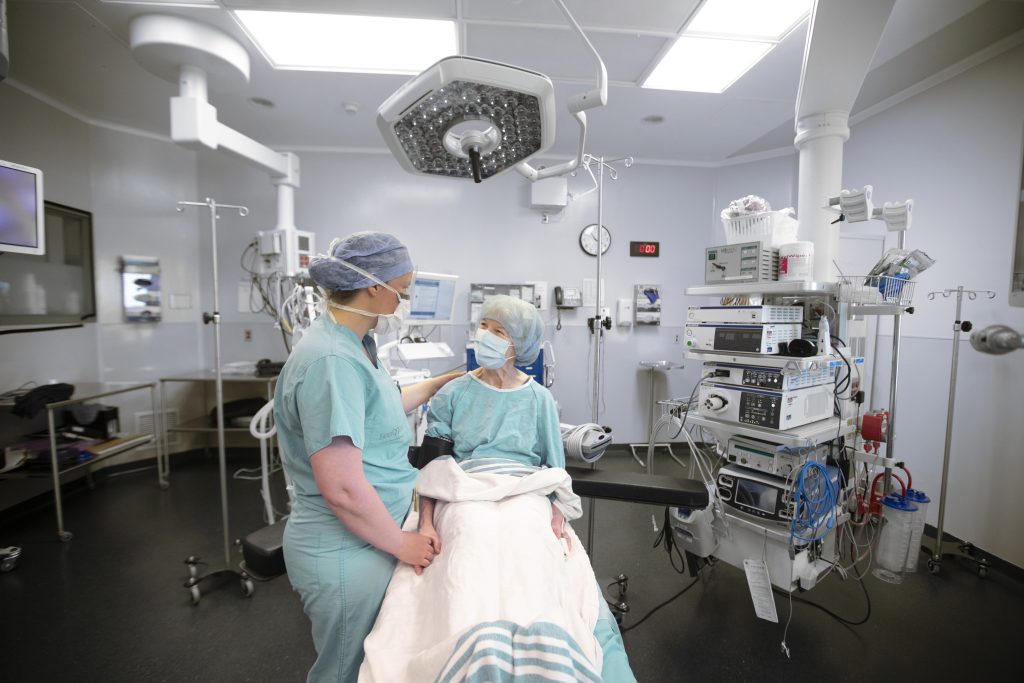
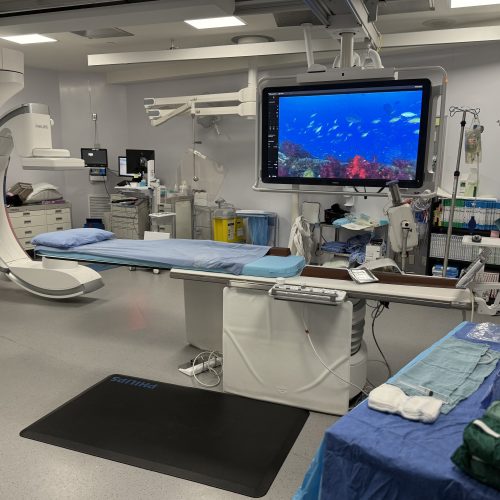
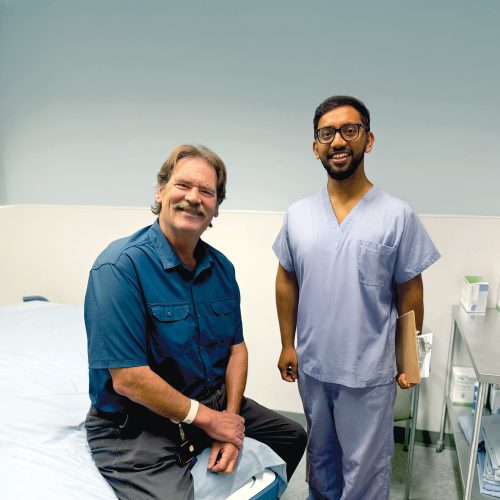
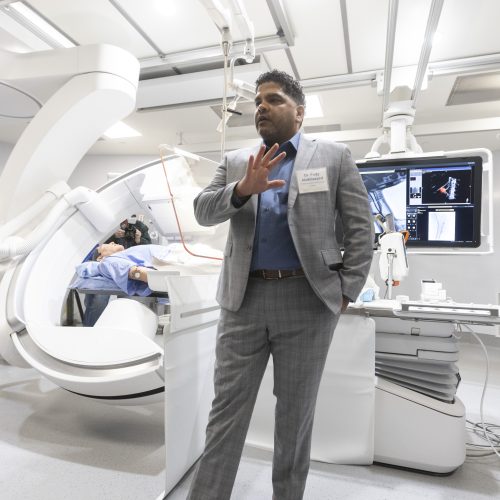
Before every operation begins, there is a moment when PRHC’s surgical team pauses and asks a simple question: “May we proceed?” For PRHC’s Chief of Anesthesiology & Co-Medical Director of Surgical Services, Dr. Carla Henderson, the answer depends on having the right tools to do her job to the best of her abilities, keeping patients safe and comfortable throughout their surgery.
The operating room is ready. The surgical team is in position. The patient is prepared.
But before the surgeon can begin, they ask: “May we proceed?” The answer comes from me.
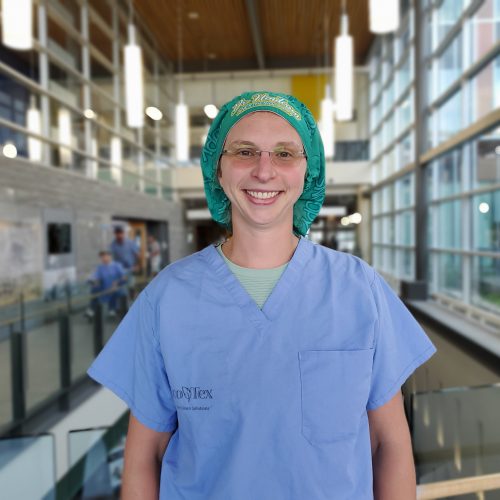
My name is Dr. Carla Henderson, and I am Chief of Anesthesiology and Co-Medical Director of Surgical Services at Peterborough Regional Health Centre.
By the time we reach this moment, I have reviewed the patient’s health information and created an anesthetic plan tailored to their individual needs. Because anesthesia is never one-size-fits-all.
Once I am confident the patient is safely under anesthesia, I give the surgeon the go-ahead. But my work has only begun. Throughout the operation, the surgeon focuses on the procedure. I focus on the patient as a whole—every breath, every heartbeat and how their body is responding to surgery.
To do that, I depend on the anesthesia machine beside me. It delivers anesthesia, supports the patient’s breathing and provides vital information that helps me adjust their care and respond to changes within seconds.
Across PRHC’s 12 operating rooms and Labour & Delivery Unit, anesthesia care supports thousands of procedures each year—from planned surgeries to lifesaving emergencies. That means our anesthesia machines are working hard, every day. After 13 years of continuous use, however, our current machines are nearing the end of their lifespan.
Every machine must pass a thorough safety check before it can be used. Increasingly, our aging machines are failing these checks and must be pulled from service. When too few machines are available, an operating room may not be able to open. That can mean surgeries are delayed. For a patient who has prepared themselves and their family for surgery, that can mean more uncertainty and more waiting. Aging equipment should not stand between a patient and the operation they need.
Replacing our anesthesia machines would do more than help ensure PRHC’s operating rooms can continue to run reliably. New machines would also bring greater precision and more personalized anesthesia care to every patient.
Technology has advanced considerably since our current machines entered service. To help bridge that gap, we have added a small number of separate monitoring devices. These devices provide information about how a patient’s brain and muscles are responding during surgery, including when medication used to relax their muscles is wearing off. That information helps us adjust anesthesia and breathing support throughout the operation. But we only have a few of these devices, so we prioritize them for patients with the most complex needs. New anesthesia machines would have these capabilities built in, giving every patient access to advanced monitoring in every operating room.
This matters more than ever. Many of the patients coming to PRHC for surgery are older and living with complex health conditions. They can be more sensitive to anesthesia, and their needs can change quickly during an operation. The more information we have, the better we can respond. With better monitoring, my colleagues and I can make more informed adjustments and tailor each patient’s care more carefully. Those decisions can help a patient wake more smoothly, breathe independently sooner and begin their recovery in the best possible condition.
Because my goal is not simply to help a patient through an operation. It’s to help them return to the life they came to surgery to reclaim. To walk without pain after a knee replacement. To go home with hope following cancer surgery. To hold a new baby after an urgent C-section.
But before a patient can begin that journey, their operation must be able to go ahead. That is why replacing PRHC’s aging anesthesia machines matters—and why donor support will be so important in making this new equipment possible. It will help ensure that when a patient is ready, the surgical team is in position and someone asks, “May we proceed?”, the answer can be yes.